
Understanding Racewear: Materials, Construction, and Safety Explained
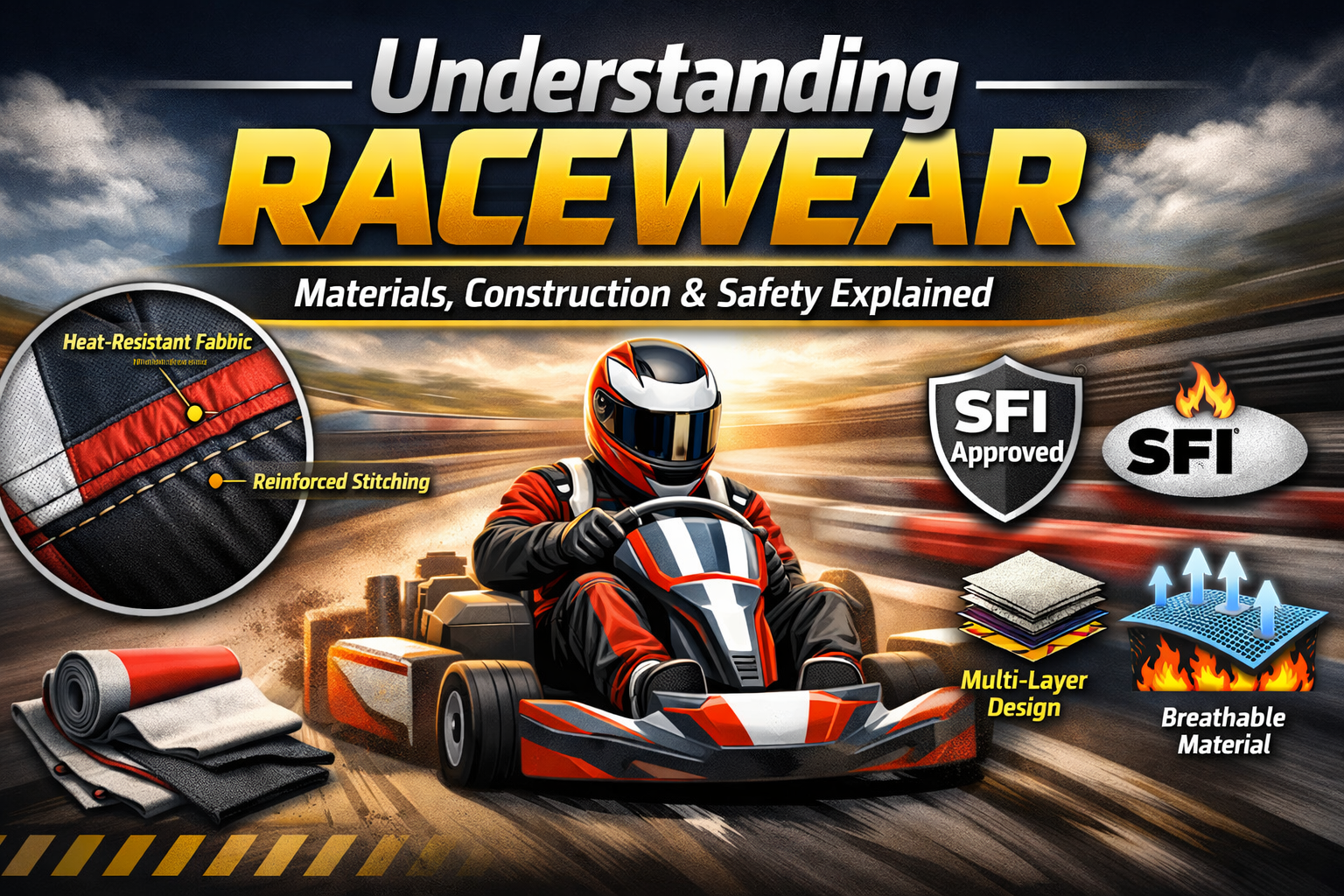
Racewear plays a critical role in motorsport, karting, and competitive racing environments. Beyond appearance, properly designed racewear contributes to safety, comfort, and performance. However, many buyers, teams, and track operators are not always aware of what actually makes racewear effective.
This article explains the key components of racewear, how they work together, and what to consider from a technical perspective.
1. Purpose of Racewear
The primary function of racewear is to:
- Provide thermal and abrasion resistance
- Reduce injury risk during accidents
- Allow mobility and comfort during long driving sessions
In karting and motorsports, drivers are exposed to heat, friction, and repetitive movement. Racewear is designed to manage these factors without restricting performance.
2. Common Materials Used in Racewear
Racewear materials vary depending on the level of racing, safety requirements, and usage frequency.
Cotton-Based Fabrics
- Breathable and comfortable
- Commonly used in entry-level karting
- Suitable for rental and training environments
Polyester and Blended Fabrics
- Lightweight and durable
- Better shape retention after washing
- Often combined with spandex for flexibility
Technical and Multi-Layer Fabrics
- Used in higher-performance race suits
- Designed to manage heat and friction
- Provide improved comfort during extended use
Material selection directly impacts durability, comfort, and maintenance cycles.
3. Construction Techniques That Matter
Beyond fabric choice, construction quality plays a major role in racewear performance.
Panel Design
- Ergonomic paneling improves range of motion
- Reduces stress points at elbows, knees, and shoulders
Stitching & Seams
- Reinforced seams increase durability
- Flat or covered seams reduce skin irritation
Closures & Fit Adjustments
- Elasticated panels support movement
- Adjustable cuffs and waist areas improve fit consistency
Well-constructed racewear maintains its shape and function over time, even with frequent use.
4. Safety Standards in Racewear
Different racing environments require different safety levels.
SFI Standards
- Common in professional motorsport
- Define material performance and construction requirements
REACH & Oeko-Tex
- Focus on chemical safety and fabric compliance
- Important for products used repeatedly or worn close to skin
Understanding applicable standards helps buyers choose suitable racewear for their specific use case.
5. Comfort & Usability Considerations
Comfort directly affects driver focus and endurance.
Key factors include:
- Breathability and airflow
- Moisture management
- Weight distribution across the garment
Two-piece racewear systems are sometimes preferred for flexibility and ease of use, particularly in non-professional or training environments.
6. Maintenance & Product Lifespan
Proper care extends the life of racewear:
- Wash at recommended temperatures
- Avoid harsh chemicals
- Allow garments to dry naturally
Durable fabrics and quality stitching significantly reduce replacement frequency, which is important for rental and high-usage applications.
7. Matching Racewear to the Intended Use
Racewear requirements differ based on:
- Rental kart tracks
- Competitive karting
- Professional motorsport
Selecting racewear based on actual usage conditions rather than appearance ensures better safety, comfort, and cost efficiency.
Conclusion
Racewear is a technical product that combines material science, construction methods, and safety standards. Understanding these elements helps teams, track operators, and distributors make informed decisions that improve both performance and user experience.
As motorsport continues to grow globally, education around racewear quality and safety becomes increasingly important.